 Reggio Emilia03
Rock
Zero Ideale
Quelli di Ieri
“Time changes everything. We give voice to what it cannot take away.”
3/6 by the artist
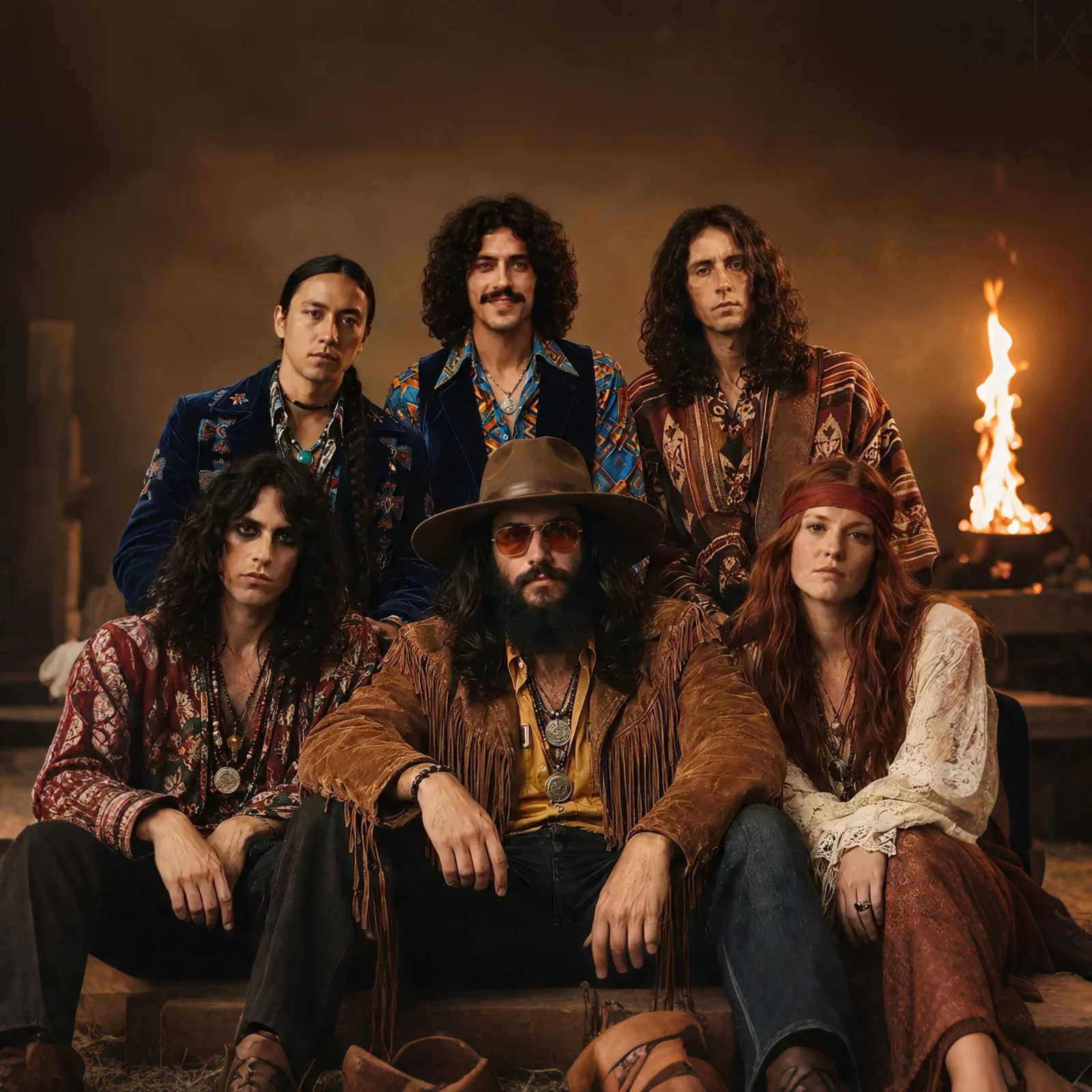
The Balubbo Blues Band blends vintage blues, roots rock and eclectic 70s-inspired sounds into a world of its own. Born from the spirit of a forgotten American music scene, their songs turn imaginary memories into timeless musical stories.
We used to make records. Now we make content. That's the blues.
— The Balubbo Blues Band
Transparency
How "Brown River" was made, role by role, as declared by the artist.
Lyrics
Melody
Vocals
Arrangement
Production
Mix & master
AI tools used: Suno, Grok
The Interview
I started making music with AI out of curiosity. I wanted to see what would happen if I could turn the music in my head into real songs, even without being a traditional musician. The Balubbo Blues Band began as an experiment, but it soon became something bigger. I started creating characters, stories, imaginary places and a whole musical past that never existed. Joe Balubbo and the band come from that world. My process is very hands-on. I usually start with a melody or a musical idea, then work on the sound, write the lyrics, shape the arrangement and keep refining the results until they feel right. AI is part of the process, but the choices, the stories and the direction come from me. For me, the most interesting part is not making a song that sounds old. It is making a song that feels as if it has a history behind it, as if someone found it on a forgotten record from 1971. I see the whole thing as a creative game: I build the world, set the rules and see how far I can take it.
AI gives me the ability to turn ideas in my head into music I could not create on my own. It helps me explore sounds, arrangements and musical possibilities that would otherwise remain out of reach. But AI does not decide what The Balubbo Blues Band is about. The ideas, stories, characters, lyrics and creative direction come from me. I choose the influences, shape the prompts, judge the results and keep working until the music expresses what I had in mind. Sometimes the first result is technically good but emotionally wrong. Sometimes an unexpected mistake leads to a better idea. Knowing what to keep, what to change and what to reject is a big part of the process. I think of myself as the player, the game master and the storyteller. AI provides the musical possibilities; I set the rules, build the world and decide where the story goes. With Brown River, for example, the technology helps create the sound, but the idea behind it — feeling attached to something ugly without pretending it is beautiful — comes from a human point of view. For me, the interesting question is not whether AI can make music. It is what a person chooses to do with it.
Brown River grew out of an idea I call “Brown Blues”: feeling affection for something ugly, damaged and far from beautiful, without trying to make it look better than it is. The song is about a polluted river, a neglected landscape and the strange familiarity of places that nobody would choose for a postcard. There is something deeply human in that feeling. You can know that a place is a mess and still feel that it belongs to you. Musically, I wanted to avoid a conventional blues sound. The rhythm has an uneasy, crooked feel, moving between an awkward three-beat pulse and a shuffle. The arrangement draws on roots music, with rough edges and small details that help the place come alive. I built the track through an iterative process with AI, working on the musical direction, lyrics, arrangement and overall atmosphere until they served the same idea. Brown River is not about finding beauty in pollution. It is about admitting that affection does not always need beauty. Sometimes all you have are the scars, the bad memories and a place you cannot quite leave behind.
“We used to make records. Now we make content. That's the blues.”
My main tool for music production is Suno, which I use to turn musical ideas into complete tracks. But I don’t simply enter a prompt and accept whatever comes out. I usually start with a melody, a musical direction or a specific feeling I want to capture. I develop the style prompt, write and revise the lyrics, and use AI to explore different arrangements and sounds. Then I listen critically, identify what is not working and keep refining the song until the result matches my original idea. I also use ChatGPT as a creative partner for developing lyrics, discussing musical structures, refining prompts and challenging my choices. I treat its suggestions as material to evaluate, not instructions to follow blindly. The visual side matters too. I develop the band’s fictional history, characters, artwork and vintage identity so that each track belongs to a larger world. For me, these tools are not a replacement for creative decisions. They are a way to experiment, make ideas tangible and build something coherent across music, storytelling and visual art.
For me, being an Italian artist in the AI music scene means bringing my own cultural background into a technology that has no borders. With The Balubbo Blues Band, I deliberately explore an imaginary American musical past: blues, roots rock and the eclectic sounds of the late 60s and early 70s. But being Italian doesn’t mean I have to make music that sounds traditionally Italian. My perspective is part of the process, even when the world I create is somewhere else. I grew up surrounded by Italian culture, where music, storytelling, characters and a certain sense of irony are deeply connected. I think these elements influence the way I build songs and fictional histories, sometimes in ways I don’t even notice. The AI music scene also gives people like me the chance to explore musical territories that might otherwise remain out of reach. You don’t need to fit into a traditional role or come from a particular musical establishment to develop a coherent creative vision.
To be honest, I may be taking a step back for a while. Over the next few months, The Balubbo Blues Band will release its next album, which may be the last chapter of this particular journey for now. I’ve put a lot of imagination, time and energy into building this project, its music, its characters and the fictional world around it. After the album comes out, I feel it might be time to pause, take a breath and see things from a different perspective. I’m not sure what comes next, and I don’t want to force an answer just to have a plan. Maybe I’ll return with new ideas. Maybe I’ll explore something completely different. Or maybe I’ll simply enjoy having created something that, at least for a while, existed beyond my imagination. One thing I’ve learned from this experience is that making music with AI is not just about generating songs. It’s about discovering what you want to say, experimenting, making choices and knowing when a chapter feels complete. For now, I want to give this final album the attention it deserves. After that, we’ll see. Sometimes leaving the ending open is the most honest way to tell a story.
Reggio Emilia03Rock
Quelli di Ieri
“Time changes everything. We give voice to what it cannot take away.”
 Torino09
 Trieste 12
Experimental
Quello che sai di noi
“I turn the deepest emotions of my soul into sound, without borders or limits.”